 EN
EN fr
fr ha
ha nl
nl ru
ru hi
hi be
be he
he ar
ar az
az af
af vi
vi ja
ja th
th tr
tr de
de pt
pt es
es it
it sq
sq ko
ko tg
tg ky
ky rw
rw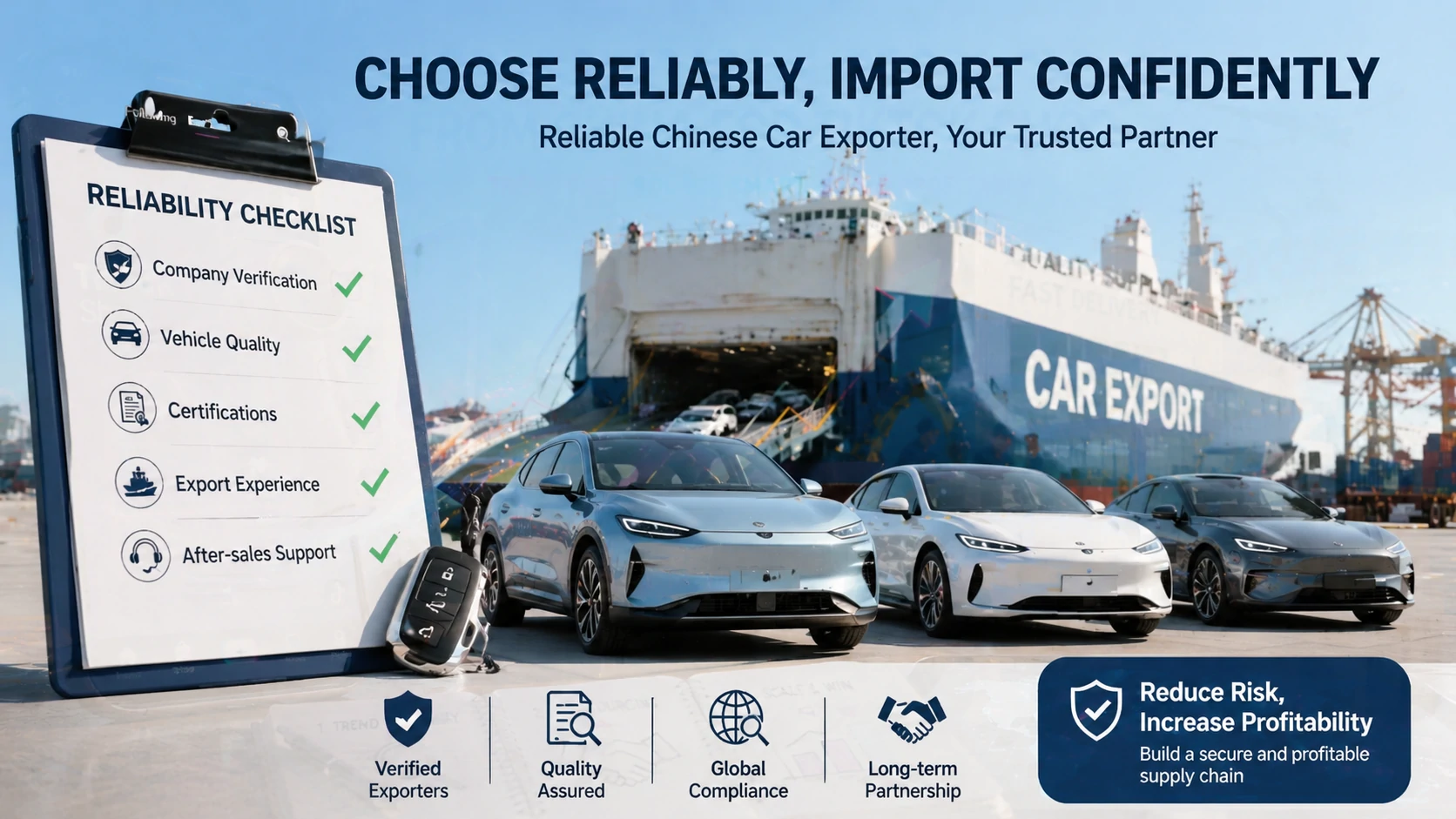
How to Choose a Reliable Chinese Car Exporter: A Practical Reliability Checklist for Global Dealers
I. The Real Risk Behind a “Good Price”
In the competitive world of automotive trade, a low quote is a powerful magnet. However, a sharp industry truth persists: the lowest quote often hides the highest risk. Overseas dealers frequently find that "savings" on the initial invoice evaporate when faced with operational failures.
International importers experience numerous common challenges that create operational difficulties.
- Delayed Shipments: Your inventory gets stuck for extended periods because of logistical delays, which result from inadequate planning.
- Misrepresented Vehicle Conditions: The presence of top-quality photographs allows people to conceal their battery damage and mechanical component deterioration of pre-owned vehicles.
- Incomplete Export Documentation: The absence of required certificates, together with paperwork mistakes, results in severe customs penalties, which include complete vehicle confiscation.
Success in this market requires moving beyond intuition. You need a structured evaluation system to vet partners. A comprehensive reliability checklist is no longer a luxury; it is an essential tool for survival in today's complex Chinese auto export landscape.
II. Understanding the Modern Chinese Auto Export Landscape
China has rapidly evolved from a hub of low-cost manufacturing into a global leader in Electric Vehicle (EV) and hybrid supply chains. This shift has created a diverse ecosystem of exporters, making the selection process more difficult for global dealers.
Exporters generally fall into three categories:
- Factory-backed Exporters: Direct arms of manufacturers focused on specific brands.
- Trading Companies: Flexible entities that source across multiple brands but vary wildly in quality.
- Integrated Supply Chain Service Providers: Companies like HN Launch that manage sourcing, inspection, and logistics under one roof.
Modern reliability is not defined solely by the size of the company. Instead, it is measured by system capability and transparency. A reliable partner provides clear data at every stage of the transaction.
III. The “Reliability Architecture” Framework
To truly evaluate a partner, look at their "Reliability Architecture." A trustworthy exporter demonstrates strength across four structural pillars:
1. Source Integrity
An exporter must prove they have access to authentic vehicle supply through OEM partnerships or authorized channels. For pre-owned EVs, they must be able to verify vehicle history, ensuring VIN traceability and full documentation transparency.
2. Process Control
Reliability is built on standardized protocols. This includes rigorous pre-shipment quality checks focusing on battery health, mileage validation, and software status. Furthermore, they must navigate export compliance, including customs clearance and necessary international certificates, without errors.
3. Logistics Execution
International shipping is complex. Your partner needs deep experience with various routes and the capability to decide between Container or RoRo (Roll-on/Roll-off) shipping based on cost and safety. This expertise ensures delivery timeline predictability.
4. After-Sales Support Infrastructure
The transaction does not end at the port. A reliable exporter maintains a spare parts supply chain and provides technical support for complex EV systems. They should also have a clear process for handling claims and resolving disputes.
IV. Chinese Car Exporter Reliability Checklist
Use this core checklist to validate any potential supplier before signing a contract.
A. Business Legitimacy Verification
- Confirm they hold a registered export license.
- Check their years in operation and annual export volume.
- Verify their physical footprint, including offices, warehouses, or factory access.
B. Product Transparency
- Demand detailed specs, including battery type, range, and condition grading.
- Insist on real photos and videos of the specific units, not just stock images.
- Ensure clear differentiation between new and pre-owned units.
C. Pricing Logic
| Pricing Element | Requirement |
|---|---|
| Transparency | Clear breakdown of EXW, FOB, and CIF costs. |
| Hidden Costs | No "surprise" handling or documentation fees later. |
| Consistency | The final invoice must match the initial quotation. |
D. Communication & Documentation
Effective partners offer fast response speeds and technical knowledge. They use standard international trade terms (Incoterms) and provide dedicated account management. Furthermore, they must demonstrate an error-free track record for Bills of Lading, Certificates of Origin, and export declarations.
V. How to Find a Trustworthy Car Exporter: A Step-by-Step Process
The process of finding a partner needs to be executed through systematic methods.
- Initial Screening: Review their website depth and product catalog. Look for specialization in EVs/hybrids rather than just general goods.
- Qualification Call: Ask targeted questions about their sourcing and logistics. The testing process needs to determine their actual proficiency in work instead of evaluating their marketing approach.
- Sample Order: Start with a pilot shipment or a small batch. You can evaluate their performance throughout the entire business process by this method.
- Verification: If feasible, visit the warehouse. The second option requires you to use a third-party inspection service for vehicle verification.
- Long-Term Evaluation: Monitor consistency across multiple orders to see if they can scale with your business.
VI. Red Flags That Signal an Unreliable Exporter
Watch for these warning signs during negotiations:
- Prices that sit significantly below the market average.
- Refusal to provide specific vehicle documentation or VINs.
- Vague answers regarding shipping timelines or delivery methods.
- Overpromising results without providing operational proof.
- The absence of any structured after-sales support or parts supply.
VII. Why Reliability Matters More for EV and Hybrid Exports
EV and hybrid trade introduces unique risks. Battery degradation is a major concern; an unreliable exporter may sell units with poor "State of Health" (SOH). Additionally, software compatibility across different regions can render a car unusable if not managed correctly.
Reliable exporters provide the technical documentation and parts supply chain necessary to keep these vehicles on the road. In the EV sector, exporter reliability directly impacts the usability of the vehicle, not just the success of the delivery.
VIII. Building a Long-Term Partnership
Choosing an exporter is choosing a business partner, not just a supplier. Consistency leads to pricing stability and priority access to high-demand models. Over time, a reliable exporter becomes a seamless extension of your own supply chain.
IX. Conclusion
A structured Chinese car exporter reliability checklist is the best defense against market volatility. By focusing on measurable and testable metrics, you reduce your risk and increase your long-term profitability.
Ready to secure your supply chain?
HN Launch offers verified sourcing and end-to-end support for EV and hybrid vehicle supply. Request our latest vehicle catalog or a customized quotation today.
FAQs
1. Why is the lowest price often considered a risk in car exporting?
The lowest quote often excludes essential costs like proper inspection, secure logistics, or valid documentation. This can lead to delays or vehicles arriving in poor condition.
2. How can I verify if a Chinese exporter is legitimate?
You should request their registered export license and check their track record of export volumes. Verifying a physical office or warehouse location is also a key step.
3. What specific checks are needed for used Electric Vehicles?
For used EVs, it is critical to verify battery health (SOH), mileage, and software status. You should also ensure the VIN is traceable.
4. What is the difference between RoRo and Container shipping?
RoRo (Roll-on/Roll-off) involves driving cars directly onto a ship, which is often cheaper for large volumes. Container shipping provides more protection and is better for high-value units or smaller batches.
5. Do reliable exporters provide spare parts?
Yes. A professional exporter maintains an after-sales infrastructure that includes a spare parts supply chain to support the vehicles after they are sold.
Hot News

Nissan and Infiniti recall 1.2 million vehicles
November 28, 2023
Best Wholesale Cars From China for Your Business
February 03, 2026

Discover Cheap Cars for Import From China
February 09, 2026
Bulk Purchase Benefits of Chinese Vehicles Explained
February 19, 2026
Bulk Car Suppliers in China: What You Need to Know
February 23, 2026
Wholesale Car Sales Growth in China's Vehicle Market
March 30, 2026
Industry information
Nissan and Infiniti recall 1.2 million vehicles
November 28, 2023

2023 BMW i7 Review: Smooth Operator, Tricky Technology
December 04, 2023
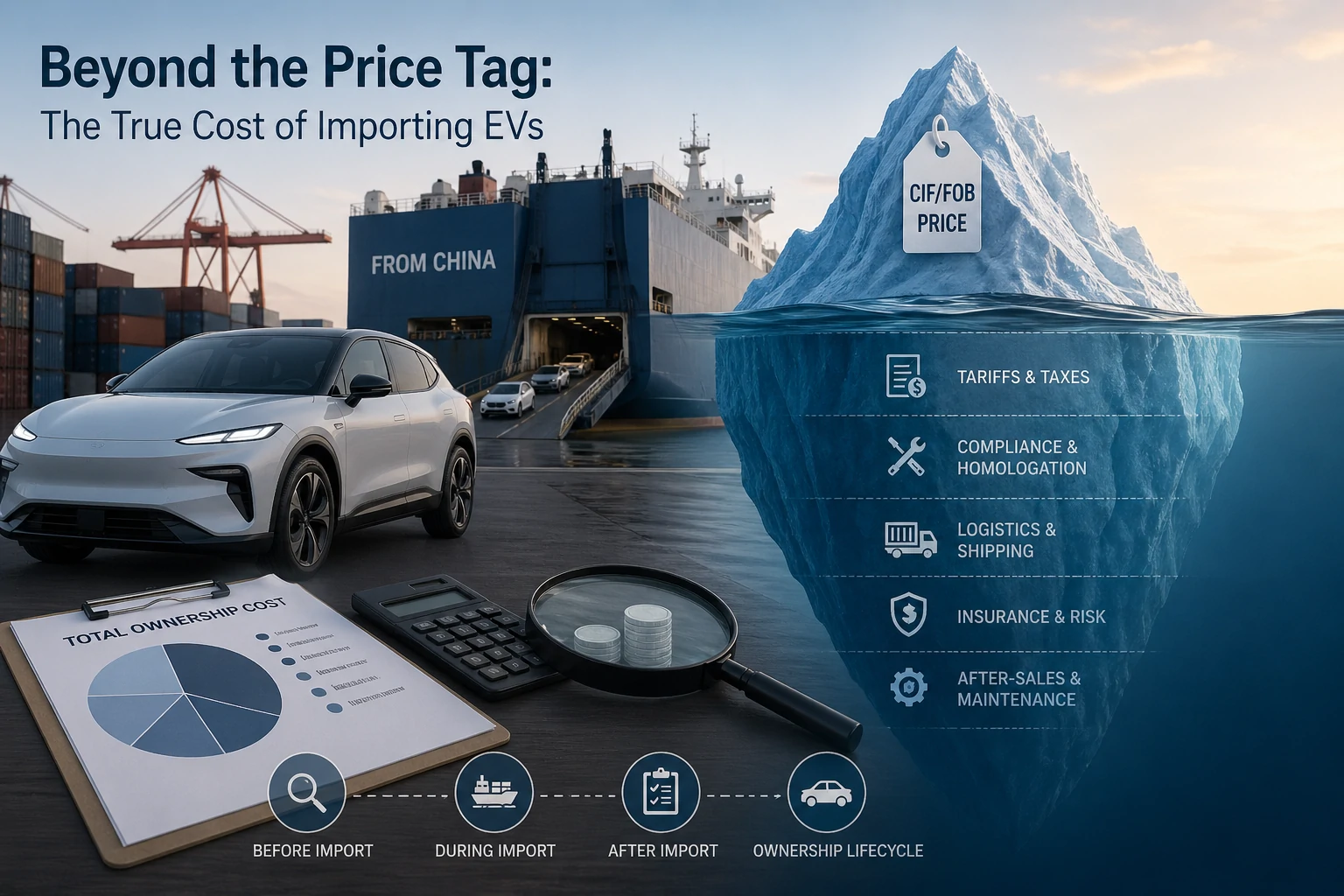
Hidden Costs of Importing EVs from China: What Buyers Often Overlook
April 30, 2026
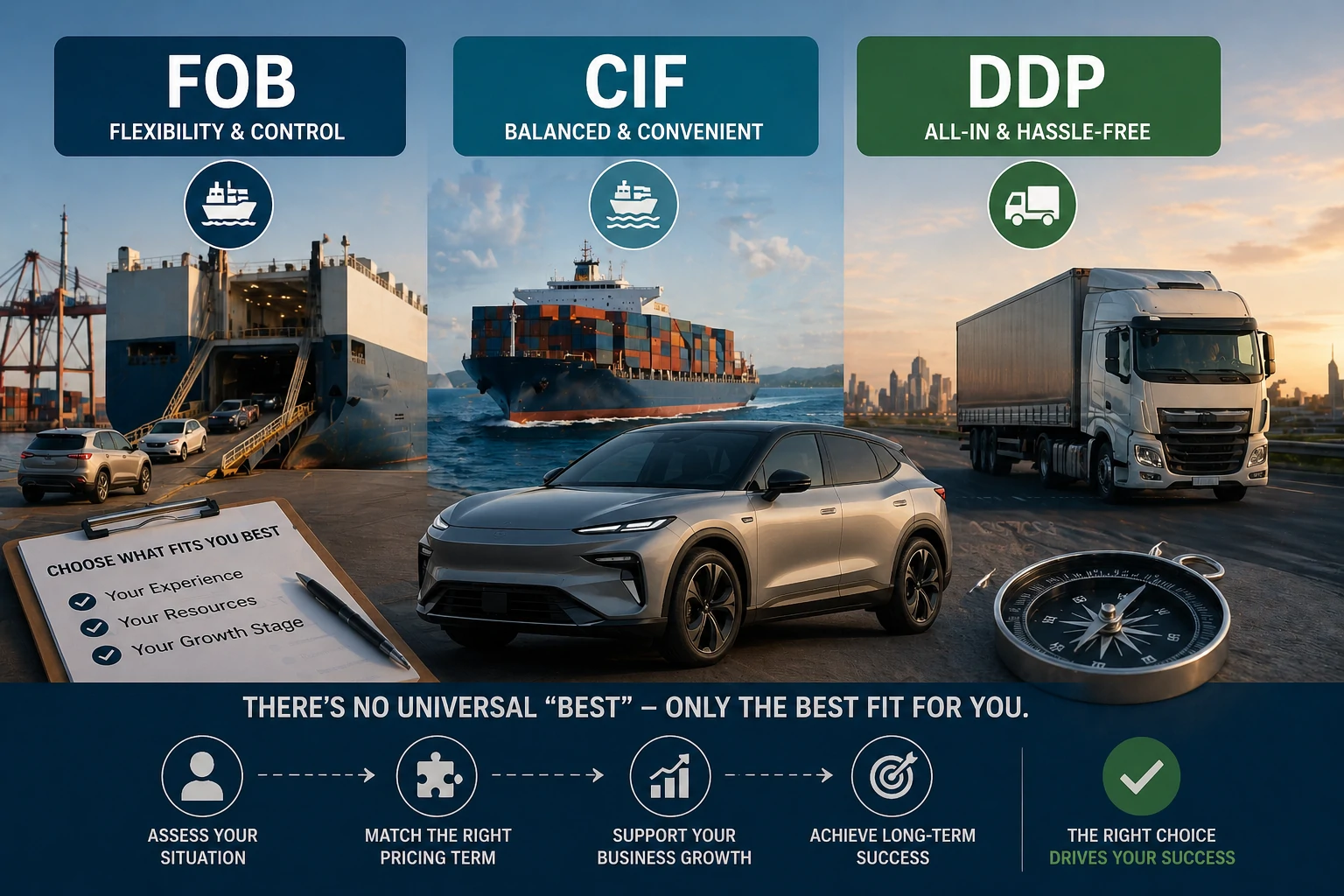
FOB vs CIF vs DDP in Car Export: Which Pricing Term Is Best for You
April 30, 2026

Meeting Along the Silk Road, Driving Toward the Future | Longchuang Automobile Appears at the Belt and Road Business Exchange Conference
May 15, 2026